Introduction
From 12 - 16 March 2025, we attended our very first Bangkok International Performing Arts Meeting (BIPAM)! 2025 marked the sixth edition of BIPAM since 2016, and the overarching theme was 'Tip of an Iceberg', calling for awareness and responsibility towards our human and natural environment, and deeper understanding of the complex systems and processes involved in the arts.
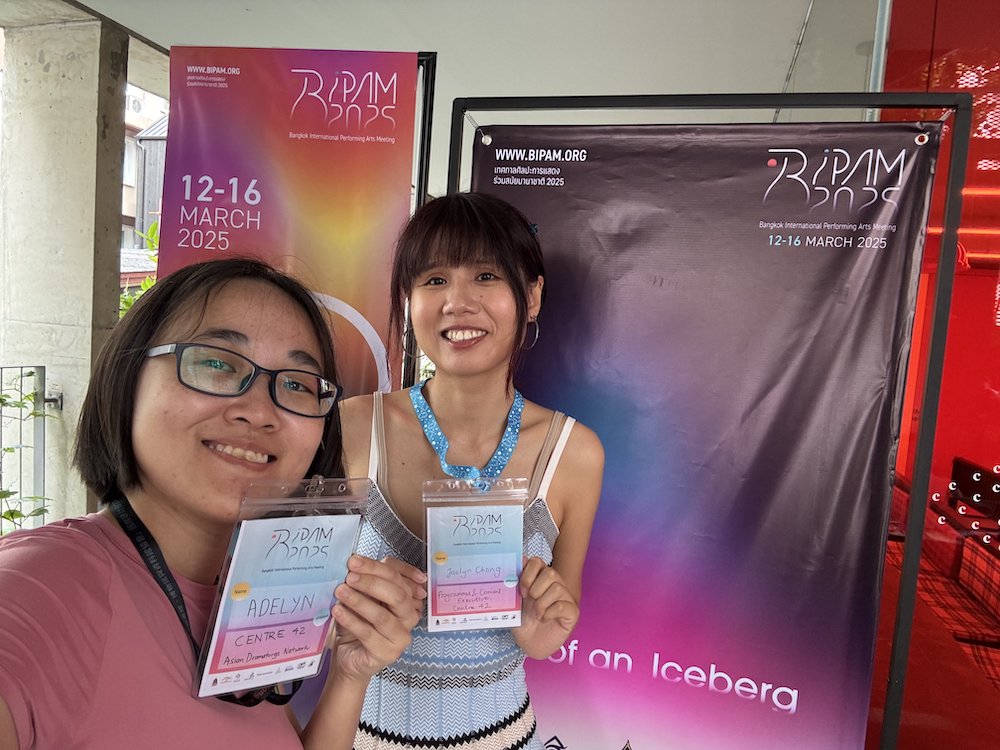
The two of us in front of the BIPAM banner, after we collected our event passes! [From left] Adelyn (Documentation Executive) and Jaclyn (Programmes and Communications Executive).
Our five-day whirlwind of an experience taught us a great deal about the event that we didn’t expect to learn, and we returned home with a renewed understanding of what BIPAM’s really about, and what you can get out of it. Three months on, we’ve put together an article that documents our experiences, and hopefully, provides some illumination for another first-timer to the event further down the line.
Read on to find out how you, too, can survive your first BIPAM!
What is BIPAM? Who is it for?
As this was our first time attending BIPAM, we both went with some assumptions and preconceptions about what we would encounter and who we would meet. Naturally, some of these were borne from our past experiences with other performing arts events, and we each came in with our own curiosities and expectations. Here’s what we thought about BIPAM going in:
Adelyn
I’d already had a vague sense of what BIPAM was since 2019, when my summer internship with Centre 42 brought me in contact with practitioners who had participated in previous editions, including BIPAM’s Artistic Director Sasapin Siriwanji. I knew it was a biannual event meant to bring together a diverse range of Southeast Asian practitioners, and provide opportunities for them to network, learn from one another, and share about their projects and artistic journeys to those who might never encounter them otherwise.
A few months prior to BIPAM, I had also attended my first professional conference in Hong Kong. It had been an incredibly fulfilling experience - I’d made new contacts in the field of performing arts archival, learned about the developments and challenges that archivists were grappling with in the current landscape, and experienced Hong Kong’s performing arts scene for myself. Reading through the activities that BIPAM 2025 was offering, I found myself keenly reminded of the conference. The structures seemed similar - talks and tables, performances, special tours - and both events offered opportunities to come together with international practitioners, delve into a packed schedule of talks, discussions, and performances, and learn new information that would help me grow in my practice.
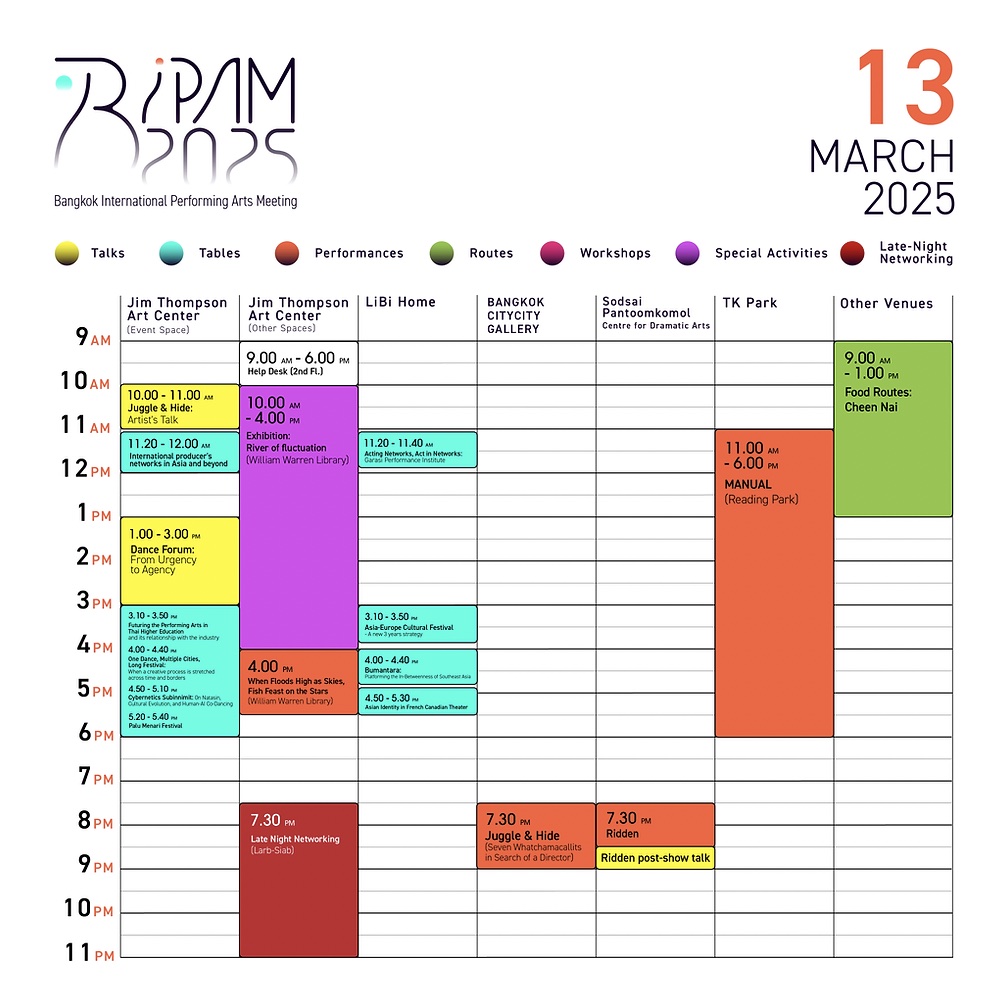
A snapshot of the different programmes happening at BIPAM on 13 March.
Though the themes, host countries, and attendee profiles were different, I found myself thinking that, at the end of the day, the whole experience of networking and learning couldn’t really be that different. Right?
Jaclyn
Back in college, I was a Theatre Studies major with a minor in Southeast Asian Studies. So attending an international performing arts meeting in the heart of Southeast Asia (a.k.a., BIPAM) was definitely up my alley! I wanted to experience the contemporary theatre/performing arts scene in Bangkok firsthand, and also understand:
- What performances would be curated under the auspices of BIPAM for an international audience?
- Why would these performances be selected and what do they reveal about Bangkok/Southeast Asia?
I envisioned programmers and producers to be the main attendees, but also hoped to meet with artists presenting their work. In the contexts of such international meetings, I was curious to hear more about each artist’s process, the conditions that they created their pieces in, and how they might enrich my understanding of Southeast Asia.
Some highlights from my experience at BIPAM were little moments that enthralled me and opened portals into understanding new worlds, such as: having a taste of the tiny little fish caught along the Mekong River during the performance of When Floods High as Skies, Fish Feast on the Clouds; holding my breath while enjoying a secret, non-verbal performance just for me in a public library as part of MANUAL, poring over the wondrous images in various documentary-style books; looking out of a centuries-old Mazu shrine on the Cheen Nai Food Route, while one of the caretakers took a siesta; and being enraptured by a presenter from Okinawa breaking out into a folk song during the Japan’s Emerging Performing Arts table.
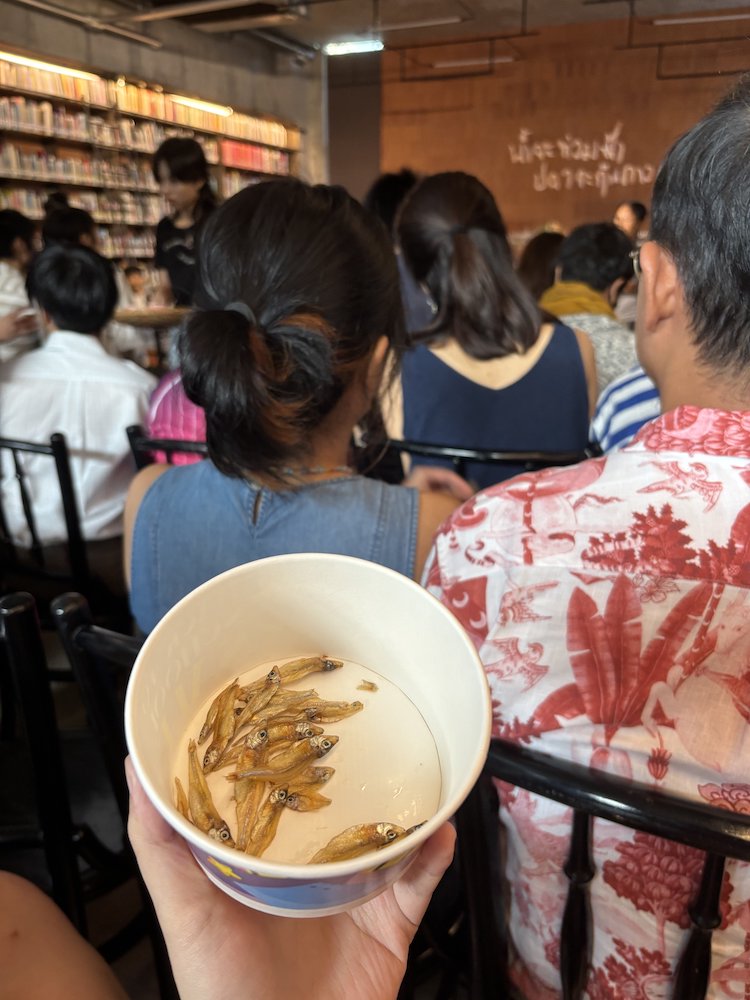
Aforementioned fish the audience was served towards the end of When Floods High as Skies, Fish Feast on the Clouds.
Programme Overview
The full BIPAM program featured a whopping total of:
- 33 talks and tables
- 6 performances
- 2 workshops
- 2 Food Routes (guided tours that explored the culinary heritage and history of several neighbourhoods in Bangkok)
- 2 special activities (an opening celebration and a night performance at Late Night Networking)
In order to fit all of these programmes into five days, they were held at various venues around the city, and at overlapping times. We thus had tough choices to make, in order to maximise our time and tailor our itinerary to our interests.
We decided to split up at some points to attend separate programmes; we also often had different insights from attending the same things. Our varied experiences at BIPAM can be summed up under three key headers: new ideas, new performances, and new people.
Experiencing New Ideas
Overview of Talks / Tables
We attended 10 of the 33 talks and tables offered as part of BIPAM 2025. These were:
- Juggle & Hide Artist’s Talk, featuring the practitioners involved in one of the BIPAM performances, Juggle & Hide - artist Wichaya Artamat, art and technical directors Pornpan Arayaveerasid and Rueangrith Suntisuk, and dramaturg Yuya Tsukahara. They spoke about the work, the motivations behind staging it, and the processes involved in creating it.
- Acting Networks, Act in Networks, featuring Arsita Iswardhani, representing Garasi Performance Institute. She shared about the work that Garasi does in bringing communities together to develop new audiences and foster the production of work and documentation of shared knowledge.
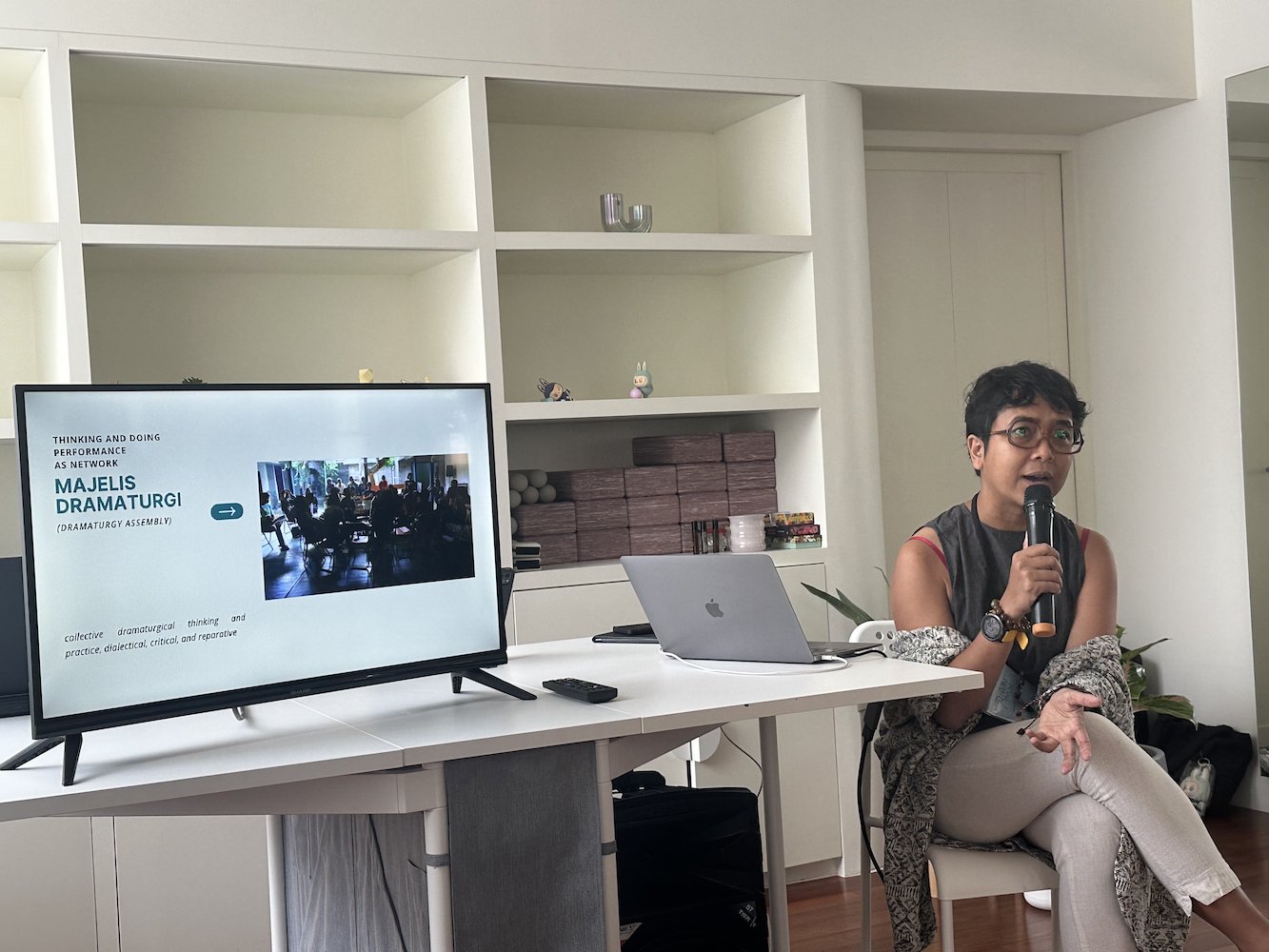
Arsita Iswardhani presenting her talk in one of the BIPAM venues, LIBI Home.
- Asia-Europe Cultural Festival - A new 3 years strategy, led by Giulia Poli, representing the Asia-Europe Cultural Festival (AECFest), which has been running annually since 2018. Poli detailed the new strategy that the festival will be adopting from 2025 onwards, focusing on the ‘festival within a festival’ format.
- Bumantara: Platforming the In-Betweenness of Southeast Asia, led by three representatives from the Djarkata International Theater Platform (director Yustiansyah Lesmana and co-curators Akbar Yumni and Brigitta Isabella). They introduced the concept of ‘bumantara’ to attendees, and prompted us to apply it to our understanding of the Southeast Asian region and the work that is created in it.
- TO-GATHER: Building Creative Networks and Their Role in Mobility, hosted by Morasum Network and POTPAN. It featured seven producers and artists hailing from various Southeast Asian countries, who shared about their experiences building and participating in formal and informal creative networks promoting community and collaboration.
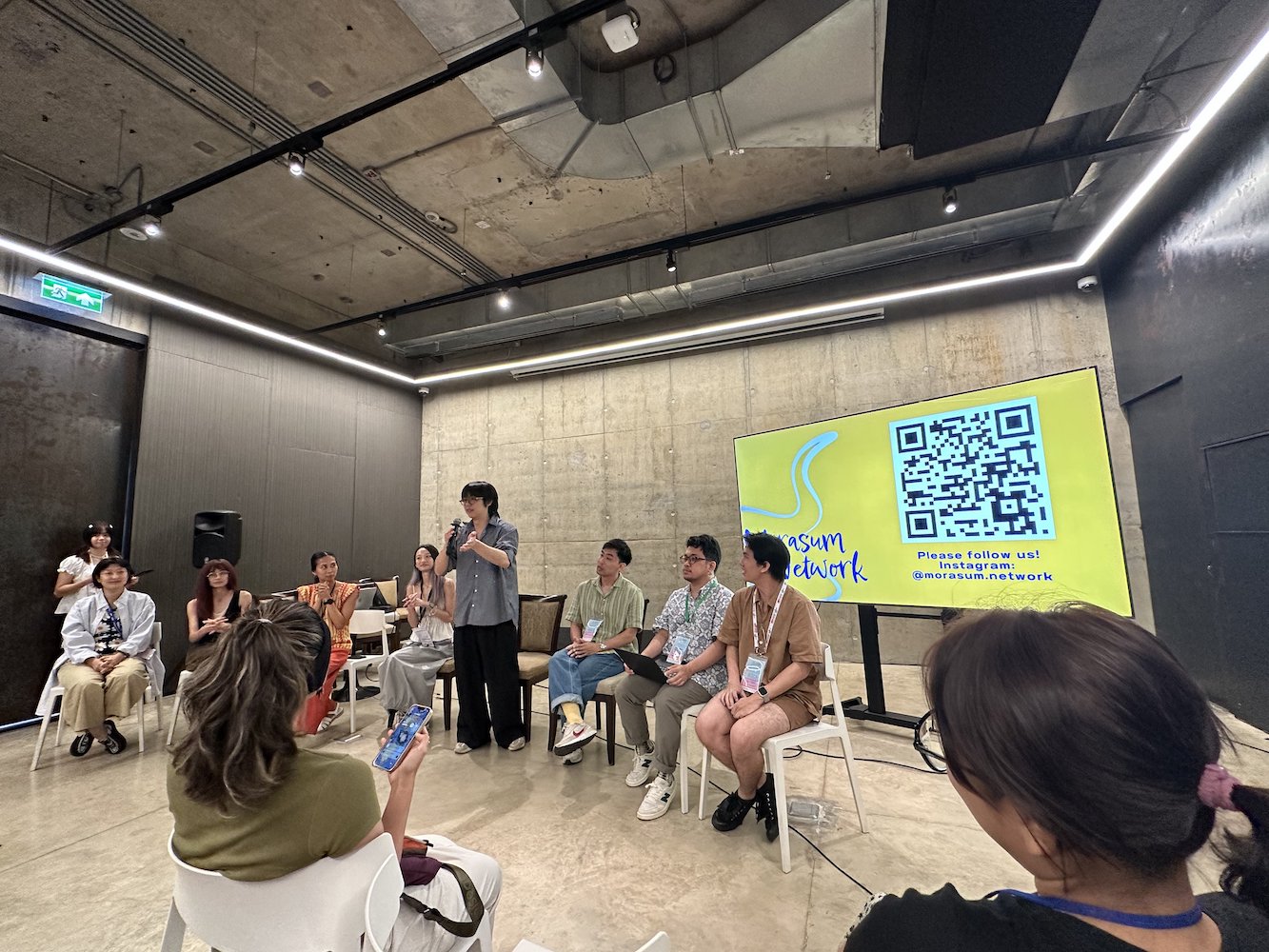
Q&A session for TO-GATHER.
- Open-Access Festivals: a Spectrum of Opportunities, featuring six speakers representing various major festivals from around the world which operate on open-access models - Edinburgh Festival Fringe, Festival Off Avignon, Pesta Boneka, Seoul Fringe, YPAM, and Bangkok Theatre Festival. The speakers shared about the histories behind their festivals, the ways in which they operate, and the aspects that make them unique.
- Asia-Pacific Festival Connections (APFC): a Network’s Journey, which introduced the aim, processes, and members involved in the network. Moderated by the director of the Asian Dramaturgs’ Network, Corrie Tan, the six speakers spoke about the festivals that they manage, the desire to foster collaboration between festivals across the region, and the ways they will be working together to operate the network.
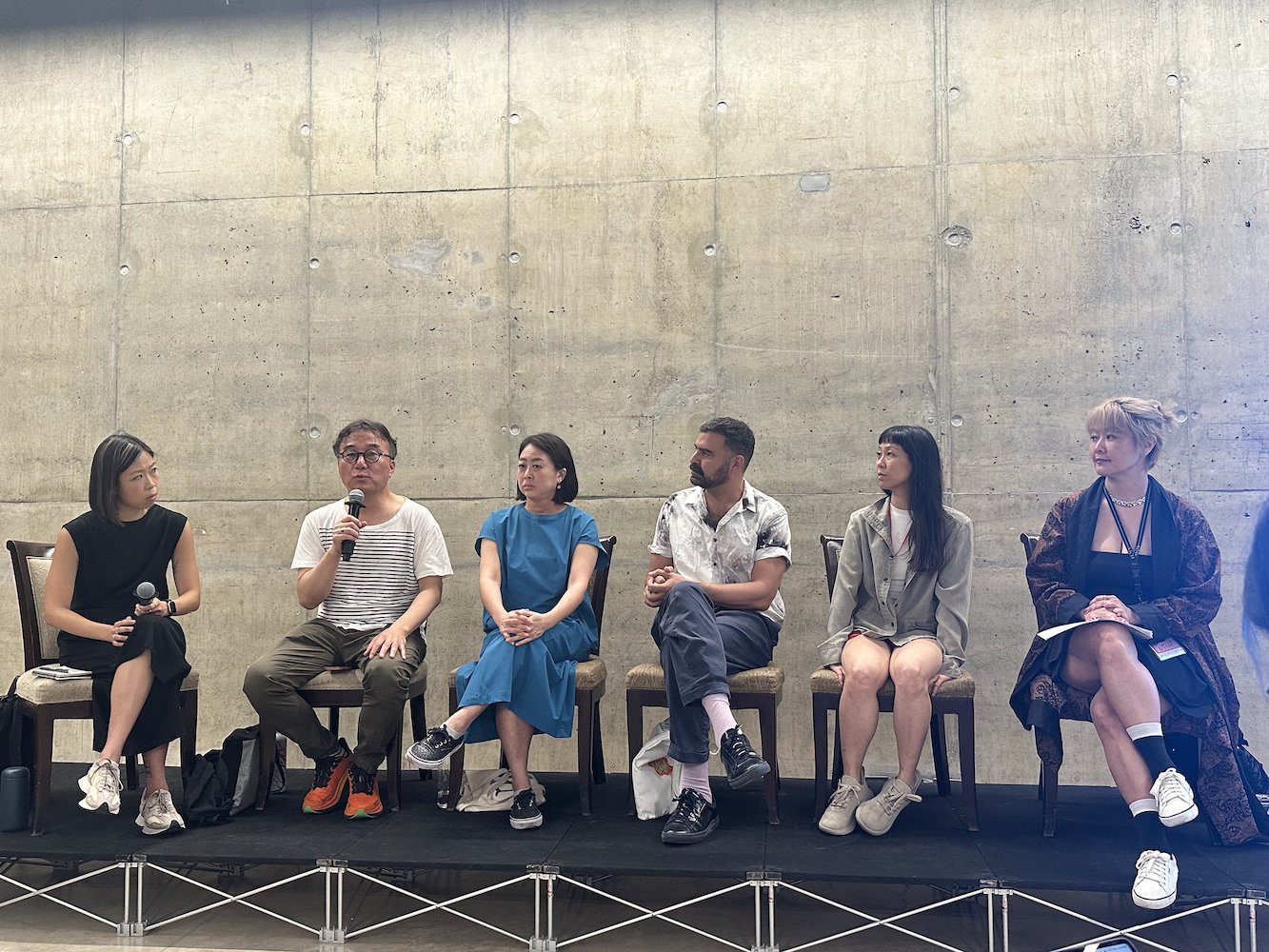
From left: Corrie Tan (moderator), Kyu Choi (Seoul Performing Arts Festival), Yoko Kawasaki (Kyoto Experiment), Jeff Khan (AsiaTOPA), Sasapin Siriwanji (BIPAM), Mu-Chin (National Theater and Concert Hall).
- Dramaturgical thinking as a way to smash capitalism!, featuring Thai-Finnish artist and dramaturg Susi Siriya Orenius, who discussed the history of dramaturgy as conceptualised and developed in the West, and the different ways dramaturgy is understood and performed depending on region, time period, artistic background, and several other factors.
- Immersive Work - Art Beyond Borders, led by Arkady Spivack, artistic producer of Canada’s Talk Is Free Theatre. Spivack discussed his company’s definition of and approach to immersive work, and the ways in which immersive work can bring new audiences into the theatre space and increase their engagement with artistic discourse.
- Japan’s Emerging Performing Arts: Perspectives from Tokyo, Osaka, and Okinawa, with Keisuke Ogawa (Producer), Kensuke Seto Cameron (Dramaturg / Ogimachi Museum Cube, Theatre Workshop) and Yoko Yamaguchi (Director of Shimokitazawa International Puppet Festival). They each presented on the landscape and challenges of the producing work they do in different art forms: puppet and object theatre around Tokyo, emerging playwrights around Osaka, and the contemporary traditional theatre scene in Okinawa.
Adelyn
When I looked at the long list of talks that BIPAM was offering, I was thrilled - they all sounded incredibly fascinating. They reminded me of the Hong Kong conference, the highlight of which had also been the numerous talks, panels, and paper presentations that I attended. I was craving intellectual stimulation at BIPAM, and hoping to learn about the many different projects that other practitioners were working on. I wanted in-depth analysis of processes, and motivations, and challenges, that I could absorb, reflect on, and take home with me to apply in my own work.
However, with three to four talks and tables on my itinerary every day, I quickly found myself overwhelmed by the sheer amount of information being delivered to me. The packed program, which meant short durations and little time between activities, certainly didn’t help. On some occasions, the material that was covered sparked several questions that I had no opportunity to bring up to the speaker due to lack of time. On others, especially for talks delivered in an unfamiliar language, I struggled to process the density of information, and once again, the lack of time limited chances to sit down with the speakers or fellow attendees to seek clarification and further explanation. Comprehensive note-taking helped, as did rereading and digesting said notes at the end of each day - I returned home with plenty of new knowledge about artistic and creative theories, practices, and projects - but it’s hard not to look back and think about all the questions I had that were left unanswered.
If I could do it over again, I would have been more selective about the talks and tables I attended - prioritising those which covered topics I was most passionate about, rather than trying to pack everything in one after another, would have given me breathing space to reflect on the new information I had learned. I would also have read and researched unfamiliar topics in advance, which would have helped to contextualise what the speakers were sharing about, especially when they went in-depth into their topics.
Jaclyn
If there’s one thing that I took away from Southeast Asian Studies in university, it would be that this region, consisting of 10 political units, is so much more diverse and heterogenous than we often think it would be. Listening to each representative present on the different initiatives in their respective countries, felt like an impossible crash course on all the political climates and social conditions under which artists were making art. What is of importance to them now? Who gets to participate in artmaking?
I found my attention shifting to their multi-hyphenated practices as movement artist, educator, visual arts consultant, independent producer. What does being a movement artist look like in the Philippines versus in Singapore? Do they perform in art galleries or in community spaces? Zooming in on how they practised their artforms, I began to see possibilities for mutual learning and collaboration.
Similarly, I found myself reaching out to those with approaches akin to Centre 42: having residencies for playwrights to create new original works (National Theatre and Concert Hall), and archiving performances for posterity (Playtext Digital Archives). It’s so fascinating to discover how we have similar starting points and desires, and yet can end up with something completely different - and that’s the beauty of networking where we can discover what we can learn from each other through our differences! For example, NTCH as a performance venue can help with the eventual staging of the play developed by the playwright but Centre 42 is mainly focused on the development process, providing mentorship and connecting the playwrights to dramaturgs. The Henseifu-Kansai Young Playwrights’ Collection project also documents ticket pricing, similar to how we conduct our annual Year in Review and look at how ticket pricing has changed over the years.
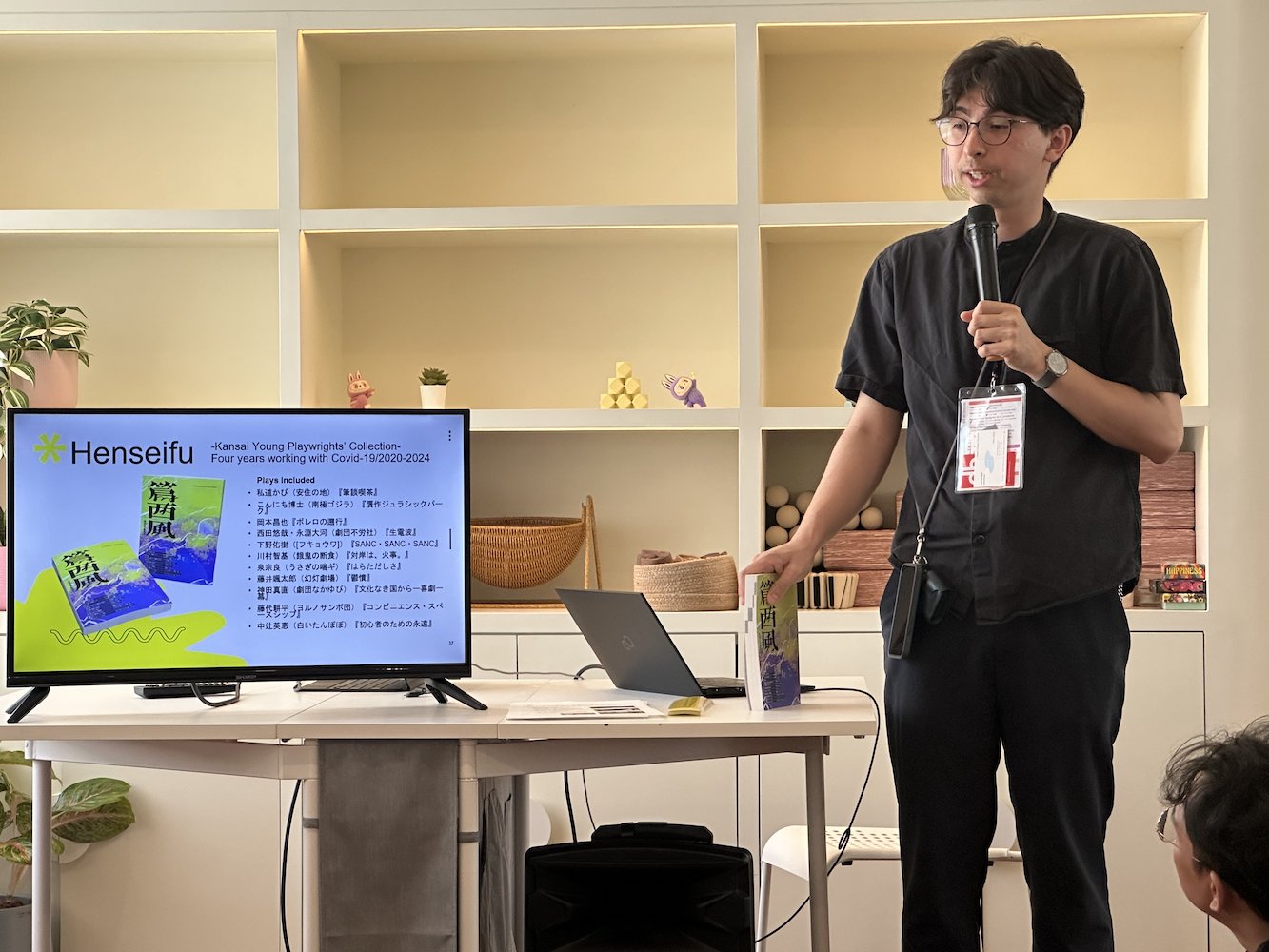
Kensuke sharing about Henseifu, a publication documenting various plays produced in the COVID years.
Seeing these similarities affirms these approaches across different contexts, and seeing these differences make us reflect on why and opens up new possibilities for our own approaches.
Experiencing New Performances
Overview of Performances
We attended 5 out of the 6 performances presented as part of BIPAM 2025. These were:
- Adam Kinner and Christopher Willes’ Manual, a one-on-one performance in the TK Park library, where performers guided audience members to perform a series of actions together. This intimate participatory experience prompted audiences to engage with the space, the performers, and the acts of reading and listening in a very different way.
- Wichaya Artamat’s Juggle & Hide, which termed itself a ‘non-human performance’. Artamat filled two long wooden tables with objects that represented many of his past works and projects, and manipulated and engaged with them to the background of a slideshow providing more context about the objects, his practice, and how his works have been influenced and inspired by Thai history and current events.
- Leu Wijee and Mio Ishida’s Ridden, a movement piece inspired by the 2018 Sulawesi earthquake and tsunami that left over 4,000 dead. Through simple yet relentless choreography, five performers engaged with the minimalist set and props to explore human responses to disaster, loss, and trauma.
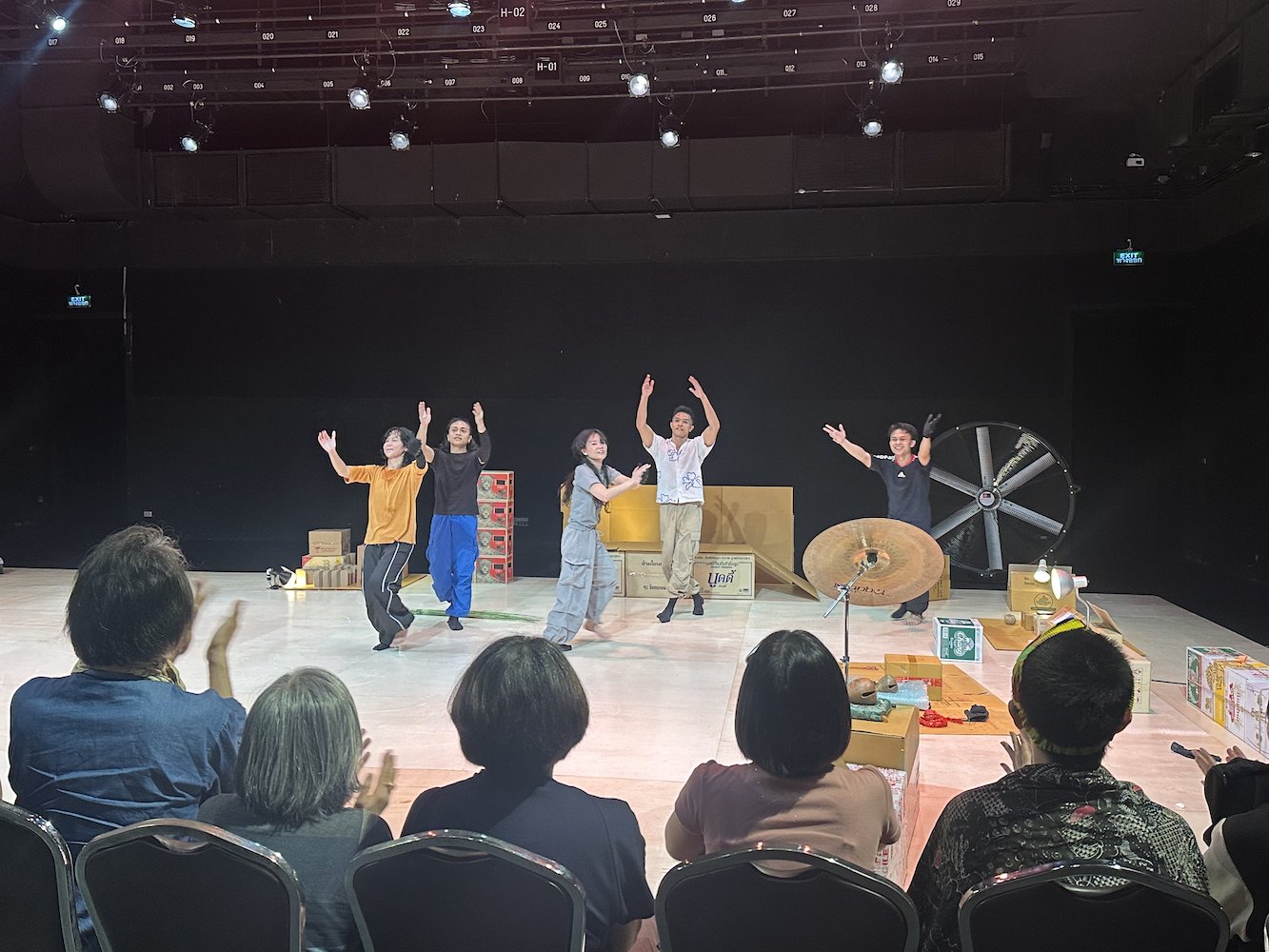
Curtain call for Ridden.
- ToLo Puppet Theatre’s Tho Dia, which explored the rich, complex, and storied history of Hanoi from ancient times to present day. Multiple mediums - text, movement, puppetry, lecture-performance, and multimedia - were applied to weave together an intertwined narrative about personal, geographical, and historical evolution.
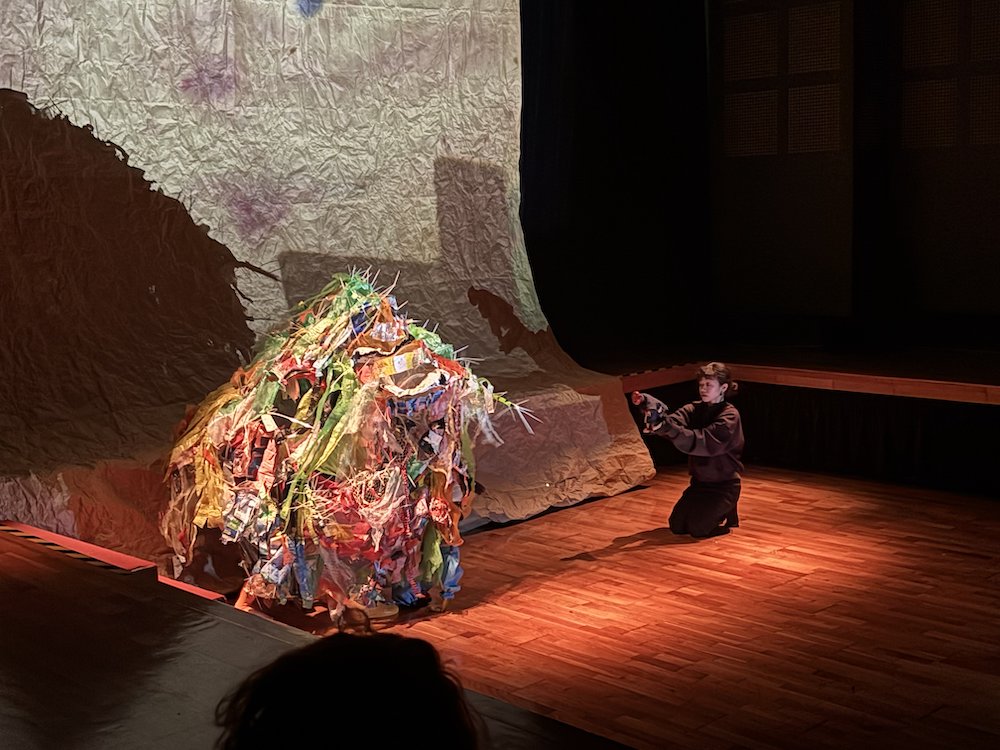
A scene from Tho Dia.
- Reverberation Area’s When Floods High as Skies, Fish Feast on the Stars, a lecture-performance presented in conjunction with the exhibition of the same name (also part of the BIPAM program). The performers presented real stories, research, and studies about power generation and consumption in Thailand, and how the energy industry shapes and impacts the country as a whole.
Adelyn
As evident from the short synopses above, four out of the five performances we watched centred around histories and events that were pertinent to the countries and regions from which their creators hailed. For a Singaporean who had little knowledge about the intricacies of Thai, Indonesian, or Vietnamese history, these performances imparted important and fascinating new knowledge about different countries. For example, Juggle & Hide provided insight into the three most recent coup d’etats in Thai history (1991, 2006, and 2014), the results of social, economic, and political turmoil across the country; When Floods High as Skies, Fish Feast on the Stars also explored Thai politics, but from the perspectives of different people - researchers, farmers, artists - who were directly affected by the construction of hydroelectric dams in rural Thai provinces.
Translation was an issue that I encountered for all of the performances - not just translating between languages, but translating between cultures. The performances were presented in the native languages of their artists - Thai, Bahasa, and Vietnamese - which I did not speak. Although subtitles were provided, I remained keenly aware that there were nuances to the original texts and dialogues that could not be captured by the English language. Similarly, the context-specific nuances, such as references to historical events and figures that would be understandable to someone immersed in the country’s culture and current events, were either lost on me, or viewed through a Singaporean lens; quite possibly, this lens led to distortion or misinterpretation of the artist’s desired meaning.
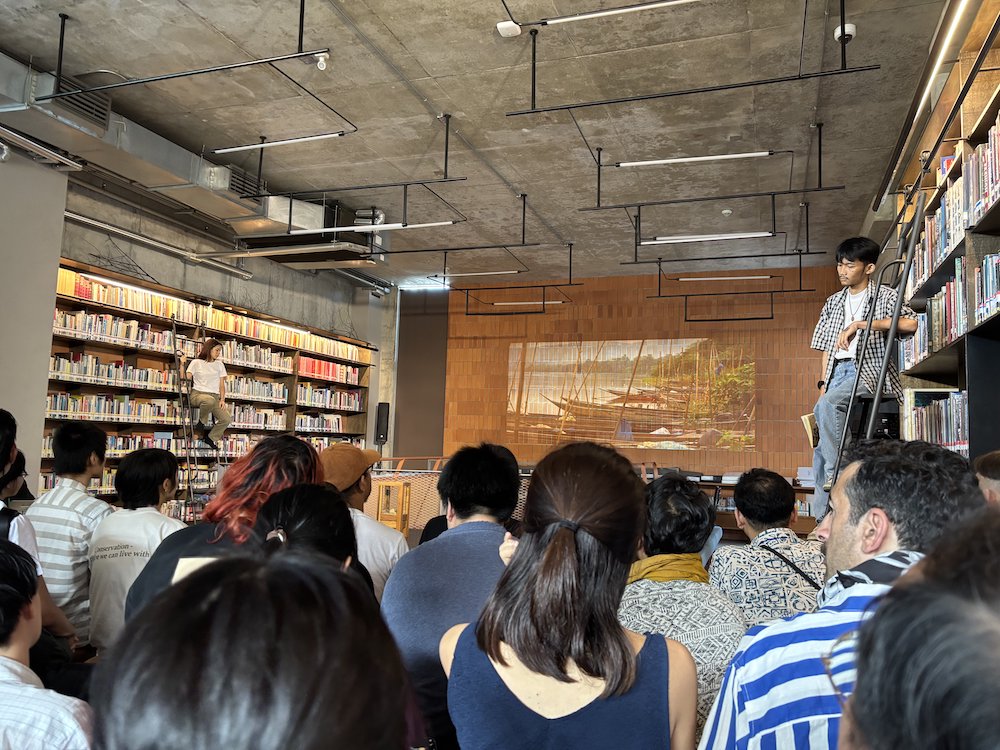
A scene from When Floods High as Skies, Fish Feast on the Stars, which was performed entirely in Thai.
That said, this did not take away from my enjoyment of the performances; indeed, to watch something I did not completely understand gave me the opportunity to ponder what was said and how it was interpreted, and to dive into my own research to find out more about the themes and topics covered in the performance. For me, the performances prompted reflection on the similarities to be found in Singaporean performances, many of which also assume their audiences’ familiarity with the Singaporean context - this is evident through the frequent use of Singlish on the stage, references to key events in Singapore history or well-known current events, and so on. It’s interesting to consider the reasons behind these similarities, and what that could say about the ways in which the performing arts in the Southeast Asian region have evolved over time. This analysis can inform future regional collaborations and inspire one’s personal practice.
Jaclyn
I was particularly interested by the framing of each performance - through the programme, publicity trailers and the artist talks. Due to scheduling, Adelyn and I attended Juggle & Hide's artist talk before experiencing the performance, and found ourselves mapping the thematic contexts uncovered from the talk with what we were seeing at the performance. While I would not recommend that as the best way to experience the performance, I left with a greater appreciation for what the artists were looking to explore, and was comfortable to sit in the discomfort of unknowing because of what I had been pre-empted for.
This comfort with sitting in the unknown helped carry me through my experiences of other performances, especially where things got lost in translation. I became drawn to the minutia of details, when text failed. Sensory experiences, such as getting to see the puppets up close before the performance began for Tho Dia, eating anchovies (caught from the Mekong river) from paper cups passed around at the end of the performance of When Floods High As Skies, Fish Feast on the Stars, became much more amplified in bridging the gap of text and meaning lost in translation.
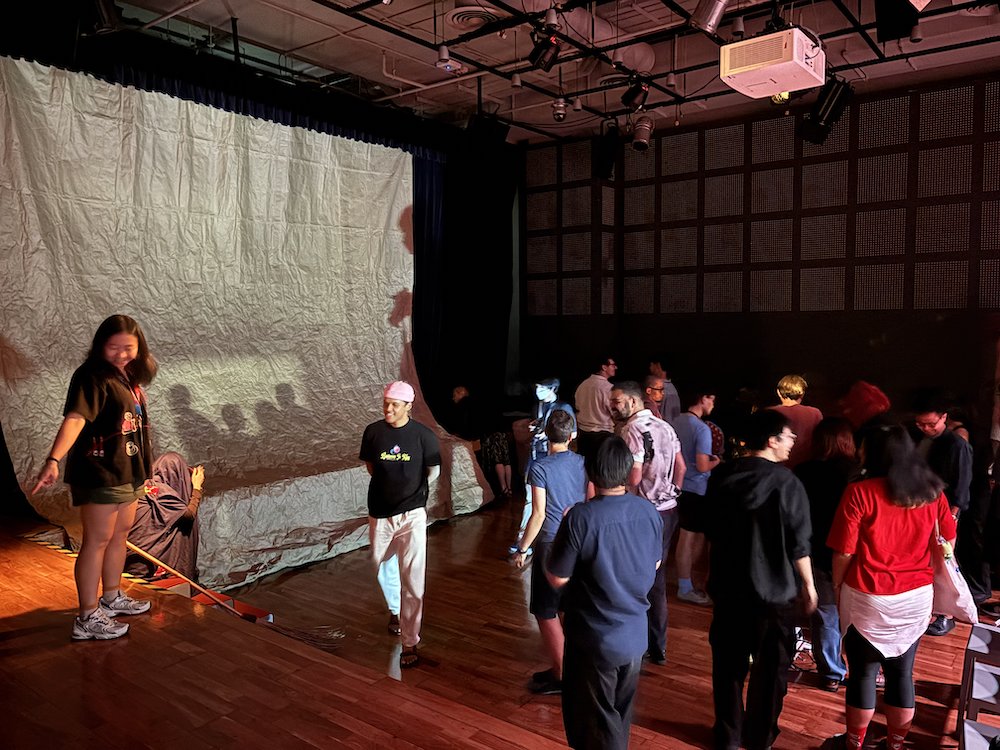
Audiences roaming around the stage to look at the props and puppets used in Tho Dia.
This was why I was taken by the simple but spellbinding ritual of dance in Ridden. It didn’t say much, didn’t have any text or multimedia, but was captivating through the repetitive, rhythmic movements that drummed and reverberated in me even after.
I was left thinking, how much explanation is too much, and when does it detriment or do a disservice to a performance?
Experiencing New People
Overview of Networking
According to the organisers and BIPAM frequent flyers, BIPAM 2025 was the best-attended of all seven editions so far. There were many opportunities to meet fellow practitioners from all over the Southeast Asian region, and indeed, the world. It’s worth noting that these opportunities are very important to BIPAM - networking and connection was what BIPAM was born to do, and they are very much built into the BIPAM experience. This is most clearly seen through Late Night Networking, a nightly activity at BIPAM’s main venue, Jim Thompson Art Center (JTAC), where attendees could mingle at the rooftop bar. This activity blocked out time and space for attendees to gather, converse, and get to know each other in a relaxed environment.
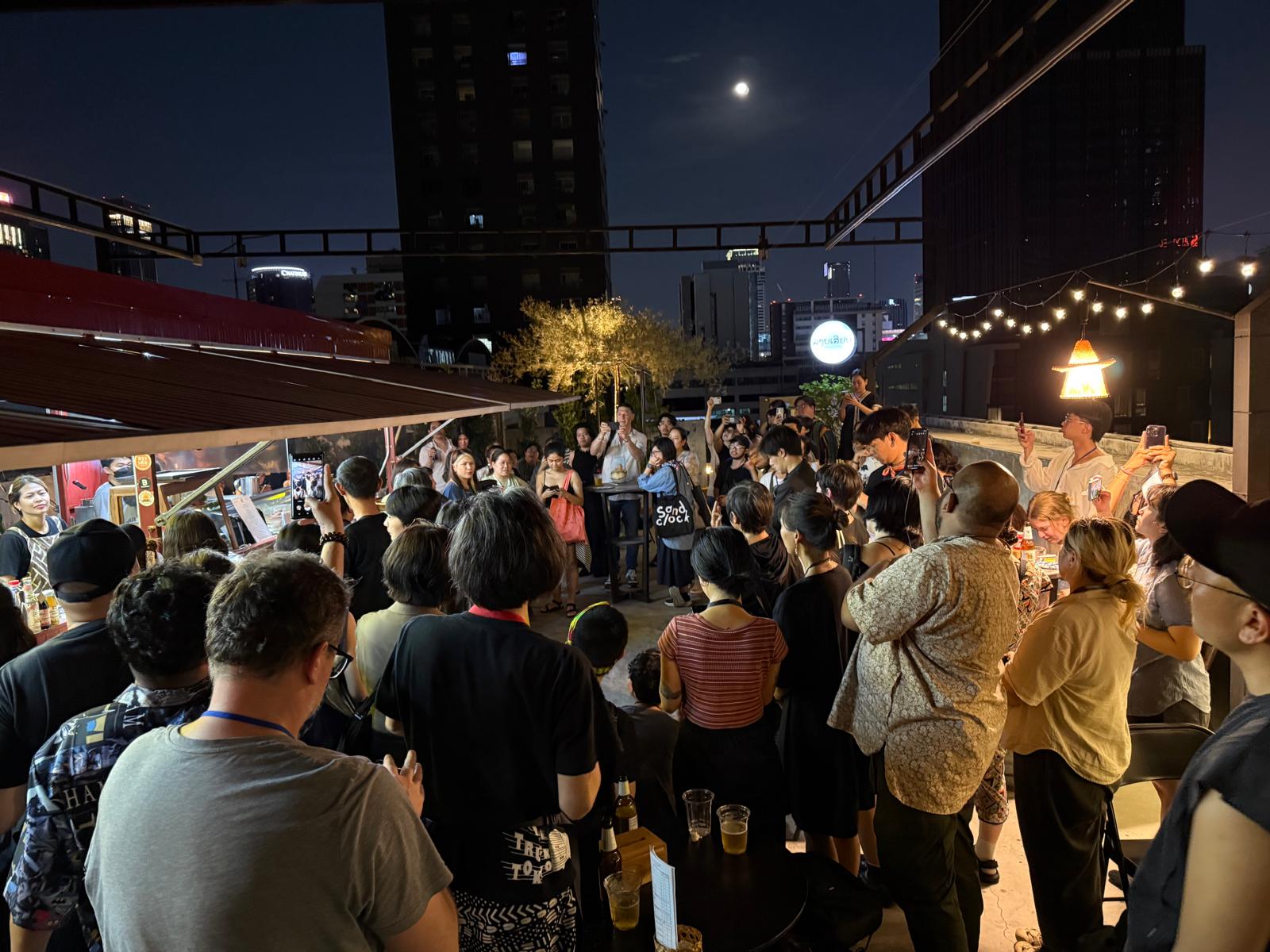
The festival closing speech, conducted at the rooftop bar during the last session of Late Night Networking.
Adelyn
It was exciting to know that so many people were attending BIPAM. I very much hoped to meet and connect with a diverse range of practitioners - to learn from, to possibly collaborate with, and simply to befriend. As Jaclyn and I were staying only five minutes away from JTAC, we decided to add Late Night Networking as the last activity for our daily itineraries, so we could end our busy days with lighthearted socialisation.
Unfortunately, this didn’t work out in practice. Our packed schedules that had us attending as many as three talks and two performances in one day had seemed easy enough to manage on paper; we had not contended with the mental overload of new information, the physical effort of navigating between venues, and the heat and humidity of Bangkok summers. By sunset every evening, there was simply no energy remaining to stumble onto the rooftop bar and make intelligent conversation with new friends.
I quickly discovered that the next best thing was to take advantage of pockets of downtime between other scheduled programmes to start conversations and get to know people. The fifteen minutes in the holding area before we watched a performance was spent catching up with Malaysian friends from Dramalab and Cloudjoi; another fifteen minutes in a Yaowarat MRT station, waiting to kick off our Food Route, were spent speaking to and exchanging contact information with Taiwanese and Korean practitioners. We also made several stops on the Food Route, which provided opportunities to sit down for communal dining and chatting over delicious meals.
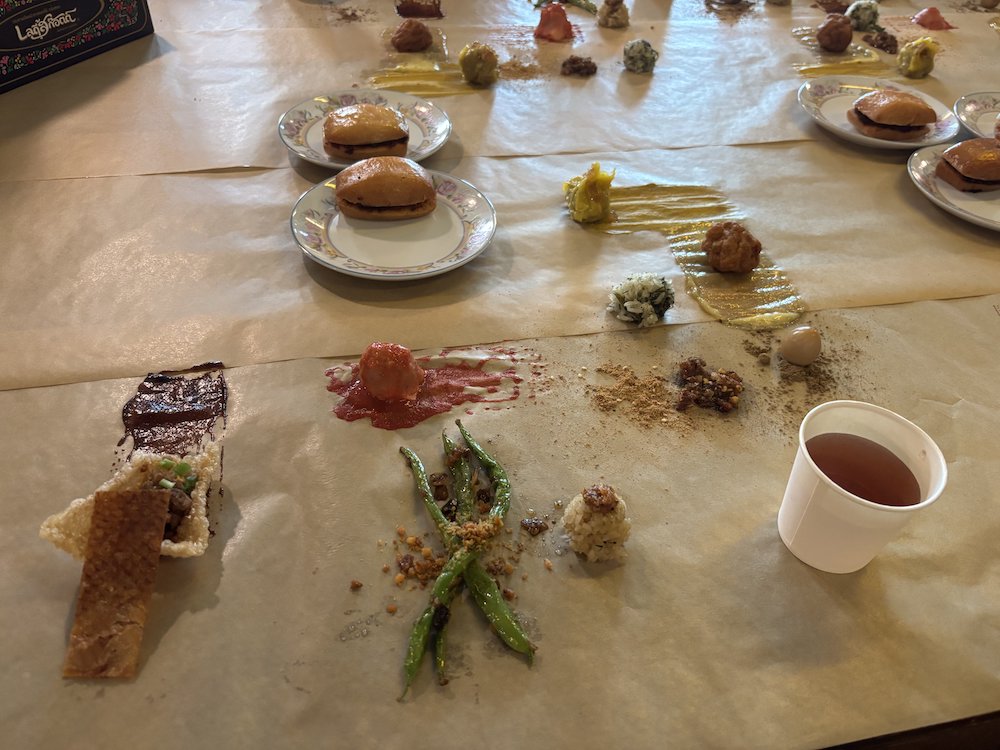
The tasting menu offered at the last stop on our Food Route at 26 Braised Beef.
I realised, after returning from BIPAM, exactly how valuable these short conversations were, and how that initial contact opened up possibilities for longer discussions that could be held days, weeks, or even months after the event.
In hindsight, I wish I had prioritised networking activities over talks and tables. There are often other chances, or different avenues, to learn much of the material and theories covered in the talks that I attended, but the opportunity to come together with so many different practitioners, and forge friendships and partnerships in an organic way, is much rarer.
Jaclyn
This was something I was quite excited about, as I hadn’t attended a performing arts conference or meeting before where people shared new ideas and ways of thinking about performance. I think the opportunity to really connect and discuss shared issues that we may face as performing arts workers and professionals is always much needed and appreciated. What struck me though was the lack of time to really get in-depth for the various conversations and collectively dream up different or new possibilities there and then. A lot of the thinking and talking would have taken place before BIPAM, as in the case of the formation of the Asia Pacific Festivals Connection or outside of/beyond BIPAM as with the Morasum Network in thinking about their next steps moving forward.
This can be draining, and in retrospect, it could have been more productive to step away from the main conversation/programme/schedule happening for the day, and seek out pockets of time to network on a one-on-one basis. As a first-time newbie to such performing arts meetings, I now understand why the contact list is sent ahead of time, so that such connections can be forged outside of the official programming!
With the sheer number of people in attendance though, all of this can be pretty intimidating, and I wonder if perhaps there could be opportunities for more facilitated networking (matchmaking/speed dating style?), so that the sharing of ideas could be richer and generative.
Conclusion
We returned from BIPAM with pages of diligently-taken notes, business cards from new friends, and a new appreciation for Bangkok’s arts and culture scene. It was interesting comparing our experiences - from the perspectives of someone encountering an event like this for the first time versus someone discovering the many differences compared to an academic conference - and taking away varied perspectives on a wide array of topics, of which we’d only scratched the surface.
Perhaps the biggest learning point that can be taken from our experience is: keep an open mind! BIPAM is a unique event, and well worth appreciating and enjoying without being held against external expectations. The best preparation you can do before hopping on your flight to attend is to read up more about it and go into the event knowing what you want out of it, and how to achieve that. With so many activities on offer, there is plenty of potential and possibility in a few short days at BIPAM. Make a conscious decision about what you want to focus on, and opt for quality over quantity. Remember: there will be more editions of BIPAM, and chances to catch up on any experiences you might have missed. Enjoy your first BIPAM to the fullest, so that you can look forward to the next!
Published: 11 June 2025